


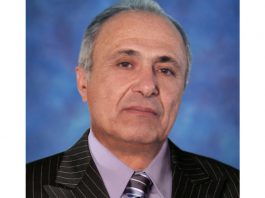

Albert Dayan, the criminal attorney working on Viktor Bout’s appeal case, claims that the Russian businessmen currently serving a 25 year sentence in a US prison was convicted of an impossible crime – a conspiracy to commit unintended murder. According to Dayan Bout’s extradition from Thailand in 2008 and his subsequent conviction in 2012 were conducted for political... » Read More
Rabbi Resigns Amid Sex Abuse AllegationsA Rabbi Ephraim Bryks from Kew Gardens Hills has resigned from the Queens rabbinical organization that was reportedly on the brink of casting him out because of long-standing sexual abuse allegations.Rabbi Ephraim Bryks, who was first accused of abusing a Canadian boy in the 1980's, resigned last week as a member of the Rabbinical... » Read More
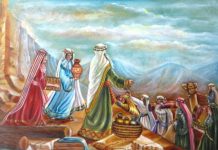
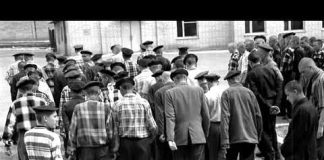
“The Bukhara Jews: The Story of a Quarter” was written, directed and filmed by Grigory Maniouk in 1995. This movie is about Bukharian Jews in their motherland town Bukhara. Bukhara is the capital of the Bukhara Province of Uzbekistan. The nation's fifth-largest city, it has a population of 263,400. Located on the Silk Road, the city has long been a center of trade... » Read More
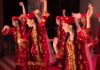
“Yuhan and Friends” Live Concert, USA 2013Benjamin Yuhan, Obid Asomov, Josef Shalomaev, Gulshan Kurbanbaeva, Marina Chello took part in the best concert of the year. In this video is also included interview with Obid Asomov and Benjamin Yuhan. » Read More
We provide ways for readers to express condolences and share remembrances of loved ones.
History of Bukharian Jews
The Bukharian people are members of the Jewish ethnicity and originate from the region of Central Asia once known as the Emirate of Bukhara. After the breakup of the Soviet Union, the majority of the Bukharian people have immigrated to the United States, Israel, parts of Europe, or Australia.
The first written account of the Jews of Central Asia was recorded in the Talmud by Rabbi Shmuel bar Bisna at the beginning of the 4th century CE. These Central Asian Jews had descended from Spanish, Persian, and Arab Jewish communities. Like other Jewish communities, they experienced periods of prosperity as well as periods of oppression. After coming into the Persian Empire after the Babylonian exile, the Bukharian Jews prospered. However, they began experiencing persecution around the 5th century with Jewish academies being closed and many Jews being killed or expelled. The Arab Muslim conquest of the region in the 8th century resulted in Jews and Christians alike being subjected to persecution.
Beset by several invasions over the next few centuries such as the Mongol invasion in the 13th century and the invasion of nomadic Uzbek Muslims in the 16th century, the persecution of the Bukharian Jews continued. Around the year 1620, the first Jewish synagogue in Bukhara city was constructed. Before this, the Jews had shared a mosque with Muslims called the Magoki Attoron. It is uncertain whether these Jews and Muslims worshipped together or separately, as sources give accounts of both. In the 18th century, Bukharian Jews once again came under persecution by ruling Muslims. The Bukharian Jewish population decreased to the point of extinction, and many of their Jewish traditions and customs were lost.
In the 18th century, waves of Jewish migration into the region caused resurgence in Jewish customs and traditions, reviving the almost extinct Bukharian community. During the mid 19th century, a large amount of Bukharian Jews immigrated to Israel. In the Bukhara region, Jews remained free from persecution until 1916 and 1917, when Soviet control of the region was cemented and persecution was resumed. This caused another wave of migration that lasted up until the 1980s and 1990s. Today, only about 1,000 Jews remain in what is now Uzbekistan, with the majority having emigrated to the U.S., Israel, Canada, and other more tolerant regions. Although having a long history of migration and persecution, Bukharian Jews still retain much of their identity, history and culture.